For many years, grey and bright white dominated Australian home exteriors. While these colours can still look modern and sophisticated, Brisbane homeowners are increasingly choosing warmer, more natural palettes that give their properties greater character. In 2026, exterior colour trends are drawing inspiration from the Australian landscape. Think soft eucalyptus greens, warm whites, sandy neutrals, earthy clay tones and carefully placed dark accents.
These colours can work particularly well in Brisbane, where strong natural light, tropical landscaping and a mix of traditional Queenslanders, weatherboard homes, brick properties and contemporary builds create opportunities for more personalised exterior colour schemes.Here are five exterior paint colour trends to consider when planning your next home transformation.
1. Sage and Eucalyptus Green
Green is becoming one of the most popular alternatives to traditional grey.Soft sage, muted eucalyptus and dusty olive tones can create a peaceful, natural exterior while helping the home connect visually with its surrounding garden.These shades can work beautifully on:
– Traditional Queenslanders
– Weatherboard homes
– Coastal-style properties
– Homes surrounded by established gardens
– Exterior feature walls
– Front doors, shutters and balustrades
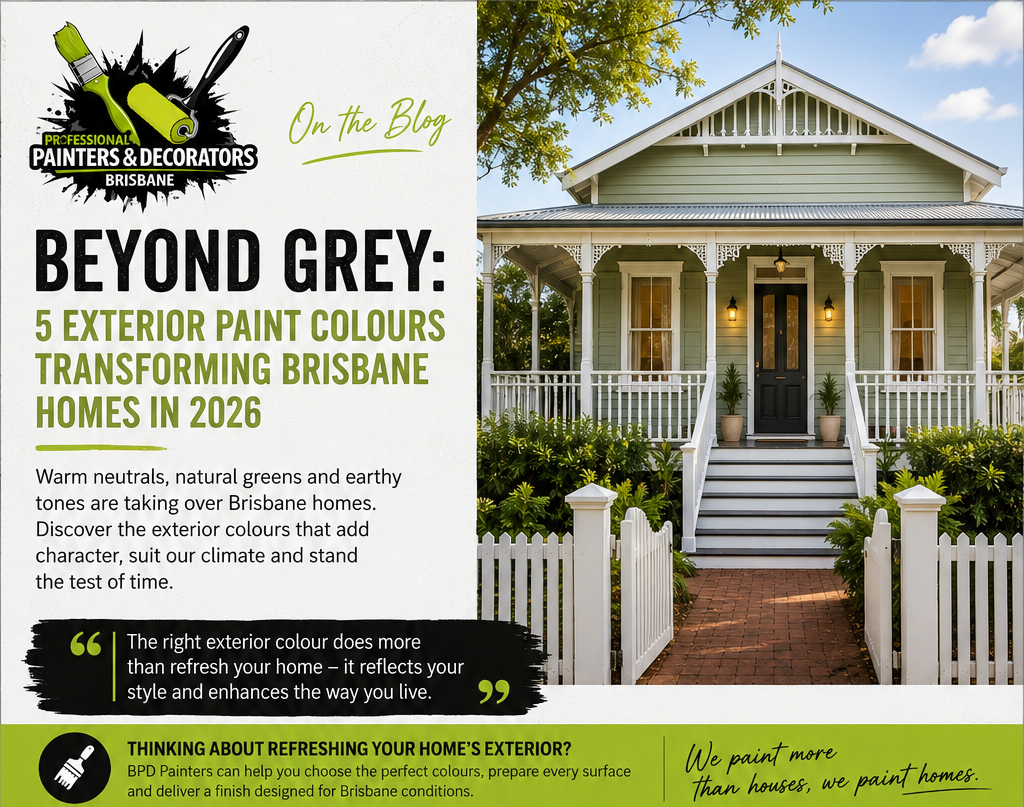
For a classic Queenslander, a muted green exterior can be paired with warm white trims, decorative fretwork and a darker front door. The result feels fresh and updated without removing the traditional character of the property.Deeper olive or moss tones can also be used on doors, trims or architectural details when homeowners want contrast without relying on black or charcoal.
2. Warm White and Creamy Neutrals
White exterior paint remains a timeless choice, but the type of white homeowners are selecting is changing.Stark or blue-based whites can sometimes appear overly bright under Brisbane’s strong sunlight. They may also create a colder appearance than expected, especially when paired with warm brick, timber or cream-coloured roofing.Warm whites contain subtle cream, beige or greige undertones. They can make an exterior feel softer, more welcoming and better connected to natural materials.Warm whites work particularly well with:
– Timber decking
– Terracotta or warm-toned roof tiles
– Red or brown brick
– Sandstone
– Green landscaping
– Cream or beige architectural details
One important consideration is that whites can look very different outdoors compared with how they appear on a small colour card. A white that seems warm inside a shop may become much brighter once it is applied to a large exterior wall.Testing the colour directly on the home is therefore an important step.
3. Sand, Stone and Warm Greige
Homeowners who appreciate neutral colours but want to move away from cool grey can consider sand, stone, mushroom, taupe or warm greige.These colours offer the versatility of grey while creating a warmer and more grounded exterior.They are especially effective for:
– Contemporary homes
– Brick properties
– Rendered exteriors
– Coastal-inspired designs
– Homes with natural timber elements
A warm greige exterior can be paired with creamy white fascia, gutters and window frames for a subtle, sophisticated finish.Alternatively, a sandy neutral can be combined with charcoal roofing or a dark front door to create stronger definition.These shades are also useful when the homeowner wants a colour scheme that feels current but is unlikely to date quickly.
4. Clay, Terracotta and Earthy Brown
For homeowners who want something warmer and more distinctive, clay, muted terracotta and earthy brown tones are making a return.These colours take inspiration from natural soil, stone and sun-baked landscapes. When used thoughtfully, they can bring warmth and personality to both traditional and modern homes. Homeowners do not necessarily need to paint the entire exterior in terracotta. Earthy shades can be introduced through:
– A front door
– An entrance wall
– Exterior stairs
– Decorative trims
– Verandah features
– A small architectural section
Muted clay tones can pair beautifully with cream, warm white, dusty green, deep brown and natural timber.The key is choosing a softened, balanced version of the colour rather than an extremely bright orange or red.
5. Deep Green, Charcoal and Near-Black Accents
Dark exterior colours remain popular, but in 2026 they are often being used more selectively.Instead of painting every exterior surface in dark charcoal, homeowners are using deep shades to highlight specific architectural features.These may include:
– Front doors
– Window frames
– Gutters and fascia
– Garage doors
– Handrails
– Balustrades
– Posts and beams
Deep green, chocolate brown, charcoal and near-black can provide contrast against warm white, beige, stone or sage walls.A darker accent can also help define the home’s structure and create a polished, contemporary appearance.However, dark colours absorb more heat than lighter colours. The condition, orientation and material of the surface should therefore be considered before making a final selection.
Why Exterior Colours Look Different in Brisbane
Exterior colours are strongly influenced by their environment.Brisbane’s bright sunlight can make colours appear lighter and more intense than expected. The same paint colour may also look different throughout the day.
For example:
– North-facing areas generally receive strong, consistent light.
– East-facing walls may appear brighter in the morning.
– West-facing walls are exposed to warmer afternoon sunlight.
– South-facing areas may make colours appear cooler or darker.
Roofing, nearby trees, neighbouring properties, paving and landscaping can also reflect colour onto the exterior.For this reason, homeowners should test potential colours on more than one side of the property and observe them in the morning, afternoon and early evening.
Consider the Entire Exterior Colour Scheme
Choosing an exterior colour is not only about selecting the main wall colour. A successful exterior scheme should also consider:
– Roofing
– Gutters
– Fascia
– Eaves
– Downpipes
– Window frames
– Door frames
– Balustrades
– Handrails
– Garage doors
– Decking
– Existing brick or stone
These elements need to work together to create a balanced and intentional result. For example, a beautiful wall colour can still feel disconnected if it clashes with the roof or existing brickwork. Planning the full palette before painting begins can help avoid costly colour changes later.
Preparation Is Just as Important as Colour
Even the most beautiful exterior colour will not create a professional finish if the surface has not been prepared correctly. Exterior preparation may involve:
– Pressure washing
– Scraping away loose or peeling paint
– Sanding rough areas
– Filling cracks and gaps
– Repairing minor surface damage
– Treating mould or mildew
– Applying suitable primers
– Sealing exposed surfaces
Professional preparation helps the new coating adhere correctly and protects the home against Brisbane’s sun, humidity and changing weather conditions.
Refresh Your Brisbane Home with BPD Painters
The right exterior colour scheme can modernise your property, highlight its architectural character and improve its street appeal.Whether you are considering a warm white, natural green, sandy neutral or a complete exterior colour transformation, Brisbane Professional Painters & Decorators can help you achieve a high-quality, long-lasting finish.Our team provides professional residential painting services throughout Brisbane, with careful attention to preparation, product selection and finishing details.
Contact BPD Painters today to arrange a free quotation for your exterior painting project.